 Many people purchase long-term care insurance (LTCI) years before they ever need it. By the time they’re ready to use those benefits, policies have often been tucked away in a filing cabinet, and families are left trying to interpret unfamiliar terminology while navigating a loved one’s changing care needs.
It’s no surprise that LTCI can feel overwhelming. Questions about eligibility, elimination periods, covered services, and the claims process often arise at the very moment families are making important care decisions.
Through Family & Nursing Care Select, Karin Martinez, Senior Long-Term Care Insurance Manager, and Alexis Shaw, Long-Term Care Insurance Manager, help clients navigate these complexities every day. Below, they answer some of the questions they hear most often and share how they help families understand their policies, navigate the claims process, and make the most of their LTCI benefits.
When should I start using my long-term care insurance policy?
One of the biggest misconceptions Karin and Alexis encounter is that people believe they should save their benefits for “later” – perhaps after moving into a senior living community or nursing home.
In reality, LTCI is often designed to help people remain safe and independent wherever they call home. Waiting too long to explore your benefits can mean delaying valuable support that could improve quality of life and ease the burden on family caregivers.
“If you have a policy, don’t assume you need to wait until your care needs become overwhelming,” Karin says. “Our goal is to support clients in getting a full understanding of their policy so they can make a well-informed decision about when to file. The majority of people who come to us seeking home care support are at a point in their lives where these benefits are indeed available to them.”
How do I know if I qualify for benefits?
Many families are surprised to learn that qualifying for benefits isn’t based solely on debilitating physical limitations. While hands-on assistance with activities of daily living is one common qualifier, some policies also cover individuals who require standby assistance because of balance issues or fall risk, for example. An individual needing supervision due to a diagnosed cognitive impairment is also often a qualifier on its own.
Because every policy is different, reviewing the specific eligibility requirements with someone who understands LTCI is an important first step.
What is an elimination period and why does it matter?
If there’s one topic Karin and Alexis discuss almost every day, it’s the elimination period. Similar to a deductible, an elimination period is the amount of time a policyholder must satisfy before insurance benefits begin. Many families assume they won’t qualify for benefits or worry they’ll have to pay for months of care before their coverage begins.
“There are potential nuances to individual policies that will help them meet this elimination period sooner than they think,” says Karin. “Many of our clients are pleasantly surprised with what we learn on that navigation call. It is common for the time a person spent in a rehab facility or while they received rehab therapies in the home to count as part of the elimination period. Most policies do not require consecutive days of care and some even fully waive the elimination period under certain circumstances.”
Alexis adds, “our role is to explore exactly how each policy works. Every insurance company has different rules, and we help families understand how to meet those requirements while making the best use of their benefits.”
Does my LTCI cover more than home care?
Often, yes. Many families are pleasantly surprised to discover their policies may include benefits beyond caregiver services. Depending on the policy, coverage may extend to home safety modifications such as grab bars or wheelchair ramps, stair lifts, medical alert systems, care management services, and other supports that can help someone remain safely at home.
Because these benefits vary from policy to policy, reviewing your coverage with someone who understands LTCI can help ensure valuable benefits aren’t overlooked.
How does Family & Nursing Care help simplify the process?
Understanding a policy is only the beginning. Karin and Alexis initially connect directly with insurance companies to help explore benefits with clients, but they are advocates throughout the whole claim process and are there to assist with claims paperwork, prepare clients for insurance assessments, and coordinate the documentation needed throughout the life of the claim.
“Our goal is to take as much stress off families as possible,” Alexis says. “We guide them through the process from beginning to end so they can focus on their loved one’s care instead of navigating insurance paperwork.”
What should I do if I haven’t looked at my policy in years?
Don’t wait until a crisis occurs to review your policy. Karin encourages policyholders to review their coverage well before benefits are needed so they understand what’s available and can make informed decisions with less stress.
Alexis also recommends identifying a trusted family member or friend – and, when appropriate, ensuring they have authorization or power of attorney – to help communicate with the insurance company if the policyholder is ever unable to do so. Having someone familiar with the policy can make the process much smoother during an unexpected illness or hospitalization.
An Advocate Every Step of the Way
LTCI can be an invaluable resource, but only if families understand how to use it.
At Family & Nursing Care Select, Karin and Alexis are passionate about helping clients understand their policies, navigate the claims process, and advocate on their behalf when challenges arise, including assisting with appeals when appropriate. Their personalized guidance helps families access the benefits they’ve planned for with greater confidence – so they can spend less time worrying about insurance paperwork and more time focusing on their loved one’s care.
To learn more about how Family & Nursing Care Select can help you navigate LTCI, visit our Home Care Services webpage.
 800-588-0517

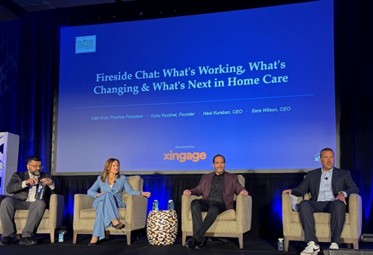 Family & Nursing Care CEO Neal Kursban recently participated in the 2026 National Home Care Conference hosted by the Home Care Association of America (HCAOA) in Orlando, Florida.


 Financial scams targeting older adults continue to rise, costing victims billions of dollars each year. According to the FBI’s Internet Crime Complaint Center (IC3), adults aged 60 and older reported more than $7.7 billion in losses in 2025 alone, a sharp increase from previous years. As scammers become more sophisticated, staying informed is one of the best ways families can help protect their loved ones.
 At Family & Nursing Care, recognizing and celebrating Caregivers is a tradition that reflects one of our core values. This year, we were thrilled to host several appreciation events across our service areas in Maryland, Washington, D.C., and Pennsylvania, creating opportunities to connect, share gratitude, and enjoy time together.



 Access to quality home care can make a meaningful difference in the lives of older adults, helping them remain safe, independent, and connected to their communities. Yet for many individuals and families, financial barriers can make receiving that care more difficult.